
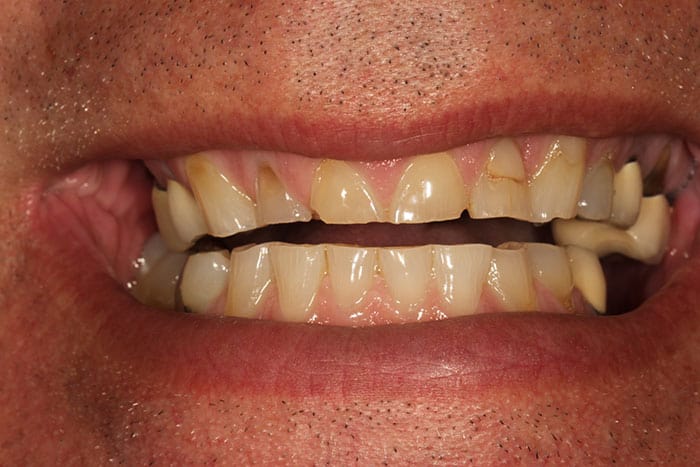
Adjustment for dental occlusion Markham is often necessary if you have an imperfect bite, or malocclusion. In a normal bite, your top teeth meet your bottom teeth at the same time and with equal pressure. Your top teeth fit slightly over the bottom ones at the front. In the case of a malocclusion, your teeth are misaligned in some way that impacts your bite.
Why Do You Need Occlusion Adjustment?
A malocclusion may impact your appearance, but it can also lead to serious problems with your dental health. For instance, your teeth may suffer damage like a chip, crack, or fracture. If it is difficult to clean your teeth, you may at higher risk for periodontal disease. Plus, you may suffer from sensitivity, pain, or temporomandibular joint disorder (TMD), including a clicking sound in your jaw.
What Are Your Options?
Your Markham dentist will advise you on the best course of treatment for occlusion adjustment.
Reshaping the teeth
In some cases, simply drilling and filling down misshapen biting surfaces can allow the teeth to come together when you close your mouth.
Reconstruction
If your teeth are cracked or decayed, your dentist can repair them. This may involve fitting you with crowns or just using fillings and dental bonding.
Orthodontic Devices
Your best option may be a device such as braces or a retainer. Either of these aligns your teeth and corrects your bite.
Mouth Guards
A final option is a mouth guard or splint. Mouth guards are usually for treating TMD. They tend to be for use at night to stop you from grinding or clenching. Splints can correct the alignment of your bite.
After treatment, you will need regular checkups with your dentist to ensure that bite problems do not return. This is critical even if you do not notice any changes, as shifts may be too slight for you to notice.